
Traditional manufacturing systems were designed for predictability. A single line would run the same part for months or years, allowing engineers to optimize every movement for speed and volume. Today, market demands have flipped. Facilities increasingly face high-mix, low-volume production schedules, where a wide variety of products must be processed in small batches.
When a factory changes setups multiple times a day, traditional automation becomes a bottleneck rather than an asset. Heavy industrial machinery takes too long to reconfigure, and specialized tooling costs eat into narrow profit margins. To remain competitive, smaller and mid-sized enterprises are shifting toward flexible automation strategies that prioritize quick changeovers and adaptable hardware.
The Friction of Traditional System Redesign
Massive industrial automation depends heavily on dedicated engineering. When a robot is assigned a task, it is mechanically and digitally tailored to that specific application. If the product geometry changes by even a few millimeters, the entire line often grinds to a halt while programmers rewrite code and mechanics swap out custom-machined metal brackets.
In high-mix environments, this downtime is financially unsustainable. The time spent idling a machine to prepare it for the next run can easily outlast the actual production time of the batch itself. This imbalance forces managers into a difficult choice: either carry excessive warehouse inventory by running larger batches than necessary, or accept a massive drop in overall equipment effectiveness.
True manufacturing agility requires a system that views changeovers as a routine task rather than a major engineering project. The solution relies on decoupling the primary automation asset from the specific task hardware.
Modular Tooling as the Central Pivot Point
A robotic arm is essentially a programmable mover. Its true utility is determined by the peripheral equipment attached to its wrist. Early automation suffered from a lack of hardware standardization, meaning an change from a mechanical clamp to a vacuum suction cup meant rewriting communication protocols and modifying physical wiring.
Modern flexible production bypasses this complexity through standardized ecosystems. By utilizing unified mechanical and electrical interfaces, operators can change tools on a single workspace within a few minutes.
| Production Attribute | Traditional Hard Automation | Flexible Automation Ecosystems |
|---|---|---|
| Setup Time | Days to weeks of engineering | Minutes via quick-changers |
| Capital Allocation | Tied to a single product line | Distributed across multiple batches |
| Programming | Proprietary code via specialists | Drag-and-drop or hand-guided teaching |
| Footprint | Massive, restricted safety cages | Compact, adaptable floor placement |
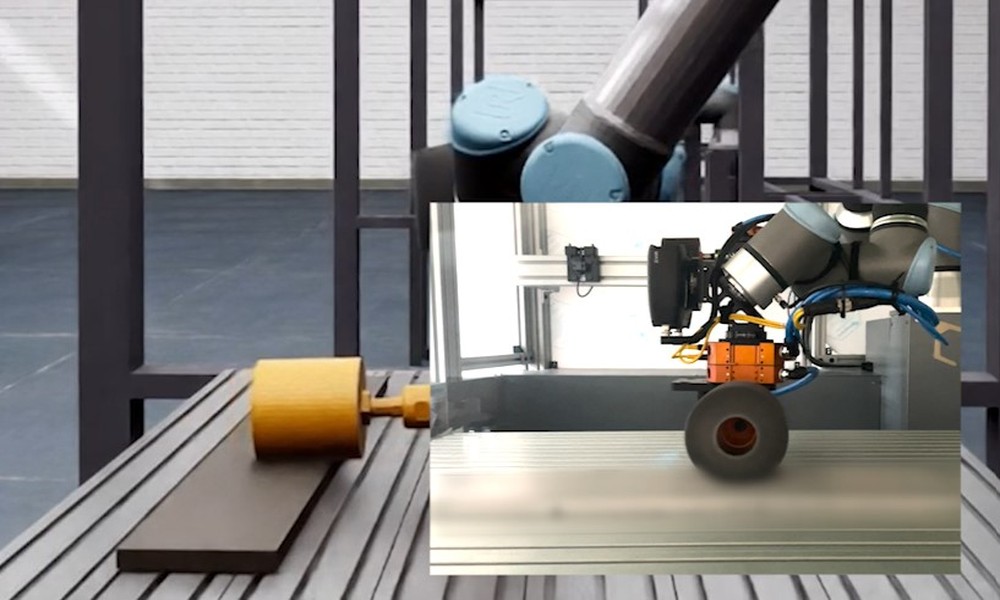
This shift from rigid setups to adaptable machinery relies on hardware designed specifically for rapid redeployment. Advanced manufacturing facilities leverage specialized solutions like Onrobot cobotics to bridge the gap between different robotic arms and an array of smart grippers, sensors, and vision systems. When the hardware interface is unified, a single machine can switch seamlessly from machine tending to sanding, packaging, or delicate assembly work without requiring an external system integrator.
Decentralizing Programming Controls on the Floor
Beyond the physical tooling, software complexity has long been a barrier to agility. If an engineer must spend hours tweaking code for every new product iteration, the high-mix model breaks down. Flexible automation counters this by moving programming capabilities closer to the actual operators on the floor.
Modern collaborative systems use visual interfaces that run on accessible tablets. Instead of typing syntax, a line supervisor can use direct hand-guided programming. They physically move the arm through the new path, saving spatial coordinates with the click of a button.
This approach changes how a business manages its human capital. Experienced floor staff understand the nuances of a process-such as how a component needs to be seated in a fixture-far better than an outside software contractor. Giving these workers intuitive tools allows a factory to adapt to changing order volumes without waiting for engineering support.
Optimizing Small-Batch Financial Risks
Investing in automation always carries financial risk, but high-mix production introduces unique variables to the equation. If a piece of equipment is purchased specifically to fulfill one client contract, that equipment becomes a stranded asset if the client changes their design or cancels the order.
Flexible systems mitigate this risk by functioning as a fluid operational resource. Because the baseline arm and its smart peripherals are completely modular, they can be reassigned to entirely different departments when demand shifts. A robot that spent the morning loading a lathe can spend the afternoon palletizing finished boxes at the end of the facility.
This continuous utility changes how businesses calculate their return on investment. The cost of the automation is no longer amortized against a single product line, but is instead spread across the entire operational output of the plant.
Balancing Human Adaptability with Machine Precision
Embracing flexible automation does not mean eliminating human workers from the loop. In fact, low-volume, high-mix environments require human problem-solving skills more than any other manufacturing sector. Humans excel at recognizing defects, managing unexpected material variations, and organizing overall workflow logic.
Machines, on the other hand, provide tireless repeatability and precision. The most efficient factories use a hybrid layout where robots handle the straining, repetitive elements of a task-such as maintaining an exact torque on a screwdriver or holding a heavy component-while the human operator focuses on quality verification and process flow. By removing the physical friction from changeovers, companies build a resilient floor that scales smoothly, regardless of how unpredictable the incoming order pipeline becomes.